Blog
Why Choose Laminated Wood Veneer Panels for Global Projects?
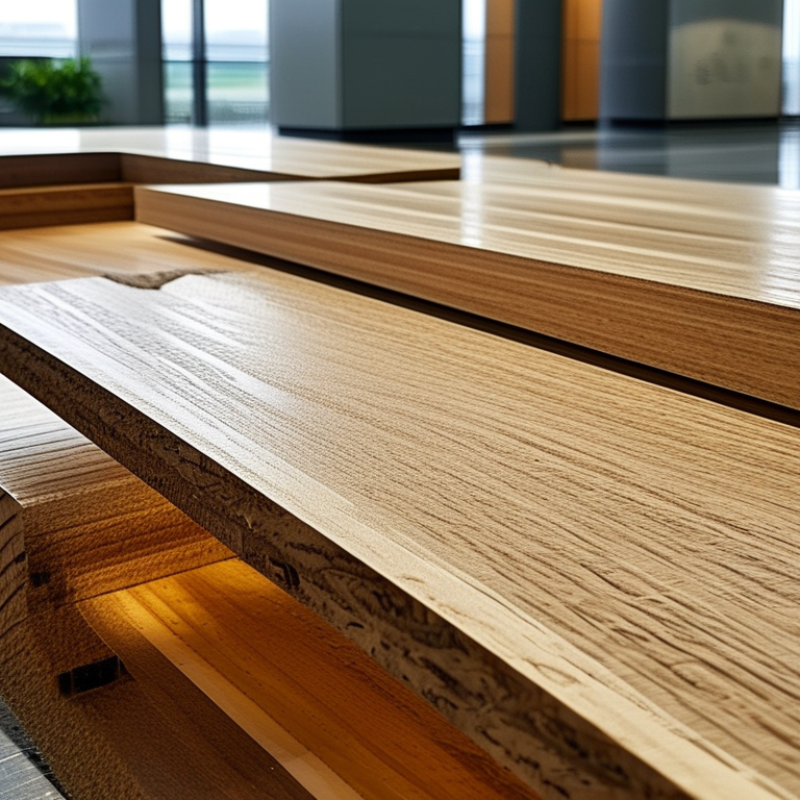
Global construction demands materials that travel well, perform consistently, and support responsible design. Laminated Wood Veneer Panels meet these needs through layered wood veneers bonded under controlled pressure. Their balanced structure can reduce warping, improve surface stability, and create a refined architectural finish. The grain remains visible, even in busy airport lounges, hotel corridors, and office interiors.
Michael Green, an architect and mass-timber advocate, has said, “Wood is the only structural material that grows.” That statement captures both opportunity and responsibility. Laminated Wood Veneer Panels can support lower-impact material strategies when manufacturers source timber from responsibly managed forests. Certifications such as FSC or PEFC may strengthen documentation for international projects. However, certification alone does not guarantee excellent performance.
Project teams must still check moisture content, adhesive specifications, fire ratings, emissions data, and local installation requirements. Panels crossing oceans may face changing humidity, temperature, and handling conditions. Small gaps can appear after installation. Details matter.
Experienced suppliers usually provide technical sheets, samples, and batch information before production. Architects can then compare color variation, veneer direction, edge treatment, and protective coatings. This process feels slower, but it prevents expensive surprises on site. The material is not perfect. No material is.
The strongest choice depends on climate, building use, maintenance plans, and verified supplier capability. When these factors align, Laminated Wood Veneer Panels offer warmth, dimensional control, and visual consistency across diverse global environments. Their appeal is practical, not merely decorative.
What Are Laminated Wood Veneer Panels?
Laminated wood veneer panels are engineered boards finished with thin, real-wood layers.
Manufacturers bond sliced or rotary-cut veneers to a stable core, often plywood, fiberboard, or another engineered substrate. The visible grain provides a natural appearance, while the core improves panel stability and handling. In practice, installers can use them for wall cladding, doors, ceilings, and custom furniture across different regions.
The construction details matter. Veneer direction, adhesive selection, edge sealing, and moisture control affect long-term performance. A panel installed beside an unconditioned loading area may react differently from one inside a climate-controlled lobby. This is often overlooked.
The Food and Agriculture Organization reported that forests covered about 4.06 billion hectares globally in 2020. Responsible sourcing therefore deserves attention, especially for large projects requiring consistent materials. Chain-of-custody records and project documentation can support better procurement decisions. They do not replace technical verification.
Laminated veneer panels may also reduce reliance on thick solid timber components, but their environmental value depends on the core, adhesive, transport distance, and service life. The 2022 Global Status Report for Buildings and Construction reported that buildings generated 37% of global energy- and process-related carbon emissions in 2021. Material choices matter, though one panel cannot solve a building’s carbon impact.
They are not flawless.
Veneers can scratch, fade, or reveal joints when poorly matched. Samples should be tested under local humidity and lighting conditions before global production. That small step prevents expensive surprises.
How Are Laminated Wood Veneer Panels Manufactured?
Laminated wood veneer panels begin with carefully selected logs, chosen for fiber direction, density, and moisture stability. Technicians remove the bark and rotate each log against a sharp knife. This produces continuous veneer sheets with consistent thickness. The sheets are clipped, graded, and dried in controlled chambers. Moisture content must stay within a narrow range. Otherwise, later bonding can become unreliable.
The dried veneers are inspected for knots, splits, and uneven grain. Workers arrange them in balanced layers, often alternating fiber directions for improved strength. A measured adhesive coat is applied between layers before hot pressing. Heat and pressure activate the bond and compress the panel into a stable form. Pressing time depends on thickness, adhesive behavior, and factory conditions. Small errors spread.
After pressing, panels are trimmed, sanded, and checked for flatness, thickness, and edge quality. Samples may undergo bond, moisture, and load testing before shipment. These checks are especially important for global projects facing different temperatures and humidity levels. The details matter. Packaging also needs attention, because trapped moisture during transport can affect a finished surface.
Manufacturing is controlled, but it is not perfectly mechanical. Natural grain changes from panel to panel, and experienced inspectors still make practical judgments. A missed moisture reading can create swelling, surface marks, or weak bonding later. Reviewing those failures helps improve drying schedules, pressing settings, and inspection records for future production.
What Performance Benefits Do They Provide?
Laminated wood veneer panels offer practical performance in global projects. Their cross-laminated structure limits movement across changing grain directions. The U.S. Forest Products Laboratory’s Wood Handbook (2021) identifies plywood as more dimensionally stable than solid wood. This matters in coastal humidity, dry interiors, and long shipping routes. Typical wood-based panels also provide moderate thermal resistance, with conductivity often near 0.12–0.15 W/m·K, depending on species and moisture.
The performance depends on design, not appearance alone. Properly sealed edges help resist moisture intrusion. Correct fastening reduces cracking and panel distortion. Surface veneers can also support consistent visual quality after installation. However, I would not call these panels maintenance-free. Poor ventilation can still cause swelling, staining, or adhesive failure. The 2023 Global Status Report for Buildings and Construction links buildings to 34% of global energy demand. Panels with verified environmental data can help teams compare material impacts more reliably, but an attractive finish is not proof of low emissions.
Tips: Specify moisture-resistant grades for humid zones. Request test data for bending strength, formaldehyde emissions, fire behavior, and dimensional change. Check the project’s local standards before approval. Leave movement gaps at large panel joints. Small details matter.
Where Are They Used in Global Projects?
Laminated wood veneer panels are used widely in global interiors where warmth, durability, and visual consistency matter. They line hotel lobbies, airport lounges, office walls, and retail counters. In these spaces, panels create a calm surface that handles frequent contact. Their layered structure also supports stable installation across large areas.
Education and healthcare projects use them for wall cladding, doors, reception desks, and built-in furniture. Designers often choose textured wood surfaces to reduce the cold feeling of institutional interiors. Acoustic backing can improve comfort in classrooms, corridors, and waiting rooms. In humid regions, project teams must check moisture resistance carefully. Small details matter.
Public transport hubs and residential developments also use veneer panels. They fit elevator interiors, shared lounges, kitchens, and stair enclosures. From project experience, the best results come from early coordination between designers, fabricators, and installers. Panel thickness, edge treatment, fire performance, and cleaning methods should match local requirements. A beautiful finish can still fail when the substrate moves or the maintenance plan is unclear. That lesson is easy to overlook. Sustainability claims also need verification through material records, responsible sourcing documents, and transparent production data. Not every wood-look panel suits every climate. Careful testing remains necessary.
Why Choose Laminated Wood Veneer Panels for Global Projects?
Laminated veneer lumber panels and components are used worldwide because their aligned wood veneers provide consistent strength, dimensional stability, and efficient material use. The chart shows common structural applications across international residential, commercial, and infrastructure projects.
Relative application index: 1 = occasional use, 5 = highly established use. This is an application-strength comparison, not a market-share statistic.
Where Are They Used in Global Projects?
Typical uses include roof rafters, floor joists, beams, girders, columns, posts, and engineered trusses. These applications are common in timber buildings, hybrid structures, prefabricated systems, warehouses, schools, and other projects requiring predictable performance and long structural spans.
How Should Buyers Evaluate Quality and Sustainability?
Why Choose Laminated Wood Veneer Panels for Global Projects?
Buyers should evaluate laminated wood veneer panels through documented evidence, not attractive photographs. Request samples from different production batches. Inspect veneer alignment, joint consistency, edge sealing, and surface defects under natural light. A panel may look excellent in a showroom but behave differently after shipping. Ask for moisture content, bonding strength, dimensional stability, and formaldehyde test results. Independent laboratory reports are more reliable than unsupported product claims.
Sustainability requires traceability. Check whether the wood comes from responsibly managed sources and whether valid chain-of-custody documentation is available. Review the adhesive system, recycled content, production waste, and packaging materials. Also confirm compliance with the destination market’s emissions and fire-performance requirements. Standards differ between regions. Do not assume one certificate covers every project. A careful buyer should compare technical data with actual climate conditions, especially humidity changes during transport and installation. I have seen specifications fail when they ignored local ventilation and maintenance habits.
Tips: Keep a physical control sample. Record its color, texture, thickness, and permitted variation. Ask for installation guidance and warranty limits. Test a small mock-up first. It can reveal swelling, color mismatch, or weak edge treatment before full production. Price still matters, but a cheaper panel may create higher replacement costs. Some evaluations remain uncertain; buyers should document assumptions and revisit them with engineers, installers, and qualified testing bodies.
| Evaluation Dimension | Recognized Data or Benchmark | What Buyers Should Verify | Why It Matters for Global Projects |
|---|---|---|---|
| Panel Composition | Veneers should be visibly and consistently bonded in parallel or specified cross-oriented layers, depending on the engineered panel design. | Request the product datasheet, layer configuration, wood species, adhesive type, nominal thickness, density, and declared end use. | A clearly defined construction helps engineers compare structural performance, machining behavior, and suitability for different climates. |
| Moisture Content | Many interior wood-panel products are commonly manufactured or conditioned around 8%–12% moisture content, although the specified range depends on the product and destination climate. | Check the manufacturer’s declared moisture range and request batch test records. Compare the target range with the installation environment. | Matching panel moisture to local conditions helps reduce swelling, shrinkage, joint movement, and installation problems. |
| Dimensional Stability | Wood is hygroscopic: it gains or loses moisture as relative humidity changes. Stability is therefore influenced by veneer orientation, adhesive quality, panel balance, and finishing. | Request thickness-swelling, humidity-cycling, or dimensional-change test results using a recognized product standard or a project-specific test method. | This is important when panels are shipped across borders or installed in regions with large seasonal humidity changes. |
| Bond Integrity | Structural laminated veneer products are commonly evaluated through shear, delamination, or cyclic-boil testing according to the applicable product standard. | Obtain third-party or accredited-laboratory reports showing the relevant bond-line test method, acceptance criteria, production batch, and test date. | Reliable bonding reduces the risk of veneer separation during transport, fabrication, humidity cycling, and service. |
| Mechanical Performance | Key declared properties may include bending strength, modulus of elasticity, tensile strength, compression strength, and shear strength. Values must be tied to a specific product grade and test direction. | Compare test values with the project’s structural calculations. Confirm whether values are characteristic, mean, or design values and identify the governing standard. | Standardized performance data allows designers in different countries to apply appropriate safety factors and engineering rules. |
| Formaldehyde Emissions | Under the European E1 classification, formaldehyde emission is generally limited to 0.124 mg/m³ when measured by the chamber method specified in EN 717-1. | Request a current emissions report, test method, sample description, and classification. Do not rely only on a general “low-emission” statement. | Emission requirements vary by jurisdiction and building type; documented results support indoor-air-quality compliance. |
| VOC and Indoor-Air Quality | VOC performance should be assessed using a recognized chamber or indoor-air test method, such as the ISO 16000 series, where required by the project. | Ask for a complete emissions profile covering the panel, adhesive, coating, and edge treatment rather than testing the unfinished core only. | Finishes and adhesives can materially affect indoor-air results, especially in schools, healthcare facilities, offices, and residential interiors. |
| Responsible Forest Sourcing | A credible chain-of-custody certification can document the movement of certified wood through harvesting, processing, and supply-chain stages. | Verify the certificate scope, certificate validity, product group, claim percentage, and whether the supplied batch is covered by the claim. | Traceable sourcing helps buyers address deforestation risk, procurement policies, and sustainability requirements across multiple markets. |
| Environmental Product Data | An Environmental Product Declaration should disclose life-cycle impacts according to ISO 14025 and the applicable product-category rules. Results are normally reported per declared unit, such as 1 m³ or 1 m². | Check the program operator, PCR version, declared unit, system boundary, reference service life, third-party verification, and geographic scope. | Project teams can compare materials more fairly when carbon, energy, water, and other impacts use consistent calculation rules. |
| Embodied Carbon | No single universal carbon value applies to all laminated veneer panels. Results depend on forest management, resin content, electricity mix, transport, moisture, and end-of-life assumptions. | Use a verified product-specific EPD or transparent life-cycle assessment. Confirm whether biogenic carbon storage and transport are reported separately. | Product-specific data prevents misleading comparisons and supports whole-building carbon assessments for projects in different regions. |
| Adhesive and Resin Content | Adhesive type and resin loading affect emissions, moisture resistance, bond performance, recyclability, and the panel’s environmental profile. | Request the adhesive family, applicable emissions testing, resin content or range, and restrictions related to heat, moisture, or exterior exposure. | The same veneer species can perform very differently when adhesive chemistry and pressing conditions change. |
| Fire Performance | Fire classification depends on the complete tested assembly, including thickness, density, surface treatment, joints, and mounting method. It should be reported under the applicable local or international classification system. | Request a fire-test or classification report matching the proposed thickness, finish, installation orientation, and substrate. | Fire requirements differ by country and occupancy type; an untested finish or installation detail may invalidate an otherwise acceptable result. |
| Durability and Exposure Class | Interior, humid-interior, covered-exterior, and fully exposed applications require different panel specifications. Moisture resistance is not equivalent to permanent weather resistance. | Confirm the approved service environment, edge-sealing requirements, coating system, maintenance schedule, and warranty exclusions. | Correct exposure classification reduces premature deterioration when products cross climate zones or are used in unfamiliar building conditions. |
| Surface Quality and Grading | Veneer grades commonly distinguish features such as knots, splits, patches, color variation, open defects, and face quality. Grade names are not automatically equivalent between suppliers. | Approve a physical sample or control panel and define acceptable limits for color, grain direction, repairs, open defects, sanding marks, and finish uniformity. | A documented appearance standard reduces disputes when panels are produced in different batches or installed across multiple countries. |
| Tolerance and Inspection | Thickness, length, width, squareness, flatness, and machining tolerances must be taken from the applicable product specification; there is no universal tolerance for every laminated veneer panel. | Include measurable tolerances in the purchase order and require a sampling plan, calibrated equipment, inspection records, and nonconformance procedures. | Clear tolerances improve compatibility with CNC fabrication, prefabrication, doors, furniture, and modular construction systems. |
| Packaging and Export Readiness | Wood packaging used in international trade may need to comply with ISPM 15 treatment and marking requirements. Panels themselves should be protected from rain, condensation, impact, and edge damage. | Confirm pallet materials, moisture barriers, corner protection, container loading, storage instructions, and documentation for the destination country. | Proper packaging protects quality during long-distance shipping and helps prevent customs delays linked to untreated solid-wood packaging. |
| Traceability and Documentation | A robust supply chain can link the delivered panels to a purchase order, production batch, raw-material source, test records, and shipment documents. | Require batch numbers, certificates, inspection reports, packing lists, certificates of origin where applicable, and a retained-sample policy. | Traceability makes it easier to manage claims, regulatory audits, recalls, and repeat orders across different project locations. |