
Blog
Top 10 Types of Benches for Global Buyers
Global buyers are rethinking how public spaces, hospitality venues, gardens, and workplaces use seating. Benches now need to balance comfort, durability, appearance, maintenance, and shipping efficiency. A wooden park bench may suit a historic square, while a powder-coated steel bench may perform better beside a busy transport hub. Small design choices matter. Seat depth, drainage gaps, fixing points, and armrests can affect daily usability.
Market data supports this wider opportunity. Grand View Research estimates that the global outdoor furniture market will continue expanding through 2030, supported by urban development, hospitality investment, and residential outdoor living. Its analysis also identifies wood, metal, and plastic as major material categories. The United Nations expects nearly 68% of the world’s population to live in urban areas by 2050. More urban users may increase demand for practical seating in parks, streets, campuses, and commercial developments. These figures are useful, but market boundaries differ between reports. Buyers should not treat one forecast as absolute truth.
This guide examines ten common types of Benches for international procurement. It considers materials, structural design, comfort, weather exposure, installation, and long-term care. It also connects product selection with recognized expectations for outdoor furniture safety and durability, including relevant EN 581 principles where applicable. Specifications still require careful verification. A catalogue image cannot reveal corrosion resistance or weld quality. Neither can a low price explain replacement costs. That is where purchasing experience becomes important: compare load ratings, surface treatments, packaging, warranties, and available spare parts before approving a supplier. Some recommendations may remain debatable. Local climate, user behavior, and maintenance budgets can change the best choice.
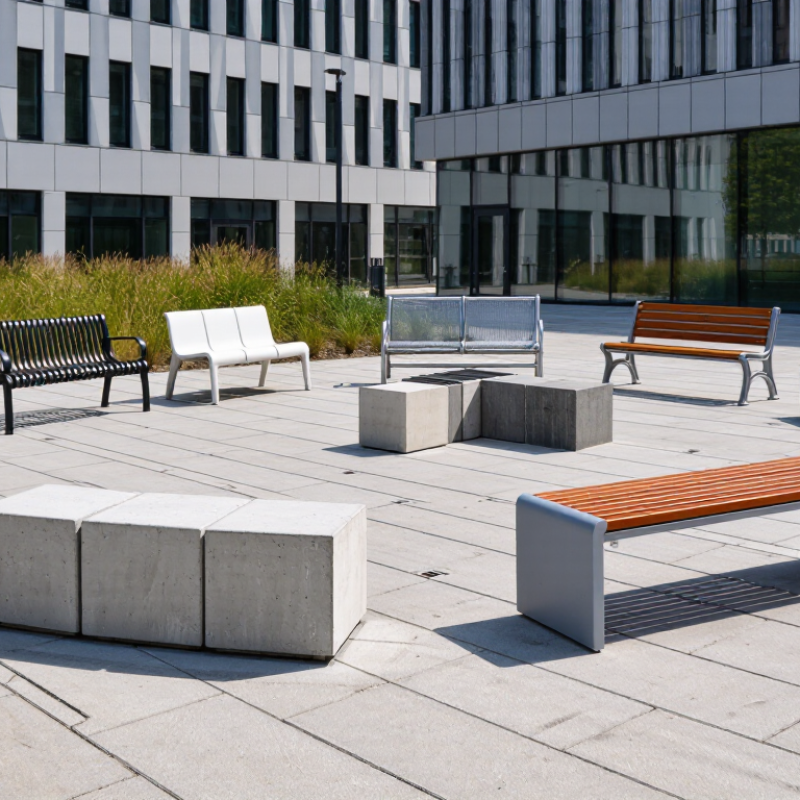
What Defines a Bench: Structure, Purpose, and Common Features
A bench is more than a seat without a backrest. It is a shared or individual seating unit designed for brief or extended rest. Most benches combine a load-bearing frame, a seat surface, and stable supports. Some include a back, arms, storage, or a protective canopy. Materials may include hardwood, steel, aluminum, concrete, recycled plastic, or mixed composites. Structure affects comfort, weight, maintenance, and shipping cost. A deep seat looks inviting, yet it may restrict movement in narrow public spaces. Small details matter.
For global buyers, purpose should guide specification. A garden bench needs weather resistance and drainage. A locker-room bench needs smooth edges, quick cleaning, and secure fixing. A waiting-room model may prioritize comfort, hygiene, and frequent daily use. Retail, transit, dining, and outdoor models can share the same basic structure, but their dimensions and durability differ. Ask for load testing, surface-finish details, assembly instructions, and replacement-part availability. Do not rely only on product photographs. They can hide wobble, sharp edges, and uneven joints. In my experience, a sample often reveals more than a polished catalogue.
Tips: Measure the installation area, walking clearance, and doorway before ordering. Confirm seat height, usable length, frame material, fasteners, and packaging protection. Request drawings with tolerances, not only rounded dimensions. Check cleaning methods and expected service conditions. A beautiful bench can still fail when water collects beneath the seat.
Ten Essential Bench Types for Different Spaces and Uses
Bench selection depends on traffic, climate, cleaning routines, and user comfort. A backless bench suits corridors, museums, and compact dining areas. A backrest bench supports longer waiting periods. Storage benches hide shoes, tools, or cushions beneath lift-up seats. Garden benches need weather-resistant finishes and drainage gaps. Picnic benches combine shared seating with fixed tables.
Locker-room benches often use slatted tops for faster drying. Waiting benches work well in clinics, airports, and reception zones. Window benches create calm reading corners. Modular benches allow layouts to change. Memorial benches serve outdoor reflection spaces, where surface durability matters.
Practical experience shows that material choice affects maintenance more than appearance alone. Powder-coated metal resists frequent handling, while hardwood offers warmth but needs scheduled care. In wet regions, stainless hardware and raised feet can prevent early corrosion. Weak drainage is easy to overlook. It becomes expensive later.
Grand View Research estimated the global outdoor furniture market at about USD 20.6 billion in 2023, with continued growth expected through 2030. That trend supports demand for durable outdoor seating, but not every market needs the same specification.
Technavio also identifies hospitality, commercial, and residential applications as important demand areas in outdoor furniture. Buyers should verify load ratings, dimensions, fire requirements, and local accessibility rules. A bench can look ideal in a catalogue, yet feel too low, too hard, or difficult to clean in daily use.
Materials, Construction Methods, and Design Variations
Top 10 Types of Benches for Global Buyers
Materials, construction methods, and design variations determine a bench’s service life more than appearance alone. Common choices include timber park benches, steel slat benches, cast-aluminium benches, concrete benches, recycled-polymer benches, backless benches, picnic benches, planter benches, gabion benches, and modular seating. Timber offers warmth and easy repair, but buyers should request moisture content, preservative details, and responsible sourcing evidence. The FAO’s Global Forest Resources Assessment 2020 reported that forests cover approximately 31% of global land area, making traceable wood procurement increasingly important.
Construction methods change installation risks. Welded steel frames provide rigidity, while bolted assemblies simplify replacement and shipping. Cast concrete resists vandalism and strong wind, yet requires suitable foundations and lifting equipment. Aluminium reduces weight and corrosion exposure. According to the International Aluminium Institute, recycled aluminium requires about 5% of the energy used for primary production, although recycled content claims still need supplier documentation. Small details matter.
Design should match climate, use intensity, and maintenance access. Perforated metal drains rain quickly; timber slats feel warmer in cold weather; backless models support short stays and flexible circulation. Rounded edges improve comfort, but poorly sealed end grain can absorb water. I have seen attractive benches fail because fasteners were inaccessible. That mistake is avoidable. Buyers should compare load testing, coating thickness, drainage, anchoring drawings, replacement parts, and cleaning instructions before approving a sample.
How Global Buyers Can Compare Bench Quality and Performance
Global buyers comparing the top 10 bench types should measure performance, not appearance alone. Backless, dining, waiting, storage, garden, locker-room, stadium, work, laboratory, and outdoor public benches serve different loads. A waiting bench may need stable seating for repeated daily use. A workbench needs a rigid frame and a surface that resists impact. EN 16139:2013 evaluates strength, durability, and safety for non-domestic seating. ISO 7173 also provides methods for testing seating strength and durability. These standards help buyers compare test evidence across suppliers.
Material changes performance quickly. Powder-coated steel usually handles heavy public use, while solid timber offers warmth but needs controlled moisture. Outdoor benches require corrosion-resistant fasteners, drainage, and UV-stable finishes. Check weld quality, joint movement, edge safety, and replacement-part access. CSIL’s World Furniture Outlook 2024 placed global furniture consumption near US$1.5 trillion in 2023, showing how important consistent specification has become. The figure is broad, not bench-specific. That limitation matters. A low-cost bench may still win if maintenance is simple and parts are available.
Tips: Request test reports, load ratings, warranty terms, and care instructions. Compare the same measurements. Ask for a sample. Measure deflection after loading, not only before shipment. For outdoor projects, review salt-spray results and water drainage. A small flaw in a weld can become expensive later. Also, supplier documents can be incomplete, and buyers should not assume every claimed cycle count reflects real public use. Consider total cost over five years, including cleaning, repairs, transport, and replacement.
Top 10 Types of Benches for Global Buyers - How Global Buyers Can Compare Bench Quality and Performance
| Bench Type | Typical Construction | Typical Length | Typical Load Capacity | Weather Suitability | Portability | Maintenance Level | Main Performance Advantage | Key Quality Checks for Buyers |
|---|---|---|---|---|---|---|---|---|
| Park Bench | Steel, cast iron, aluminum, timber, or recycled plastic slats with a fixed frame | 120–200 cm | 250–500 kg | High when corrosion-protected | Low | Low to medium | Strong stability and long service life in public spaces | Check frame welds, anchor points, coating thickness, drainage, edge finishing, and seat deflection under load |
| Garden Bench | Usually treated wood, metal, or weather-resistant composite materials | 100–180 cm | 200–400 kg | Medium to high | Medium | Medium | Balanced comfort, appearance, and outdoor usability | Review moisture resistance, UV stability, fastener material, wood treatment, and replacement-part availability |
| Backless Bench | Simple seat made from wood, metal, concrete, stone, or recycled plastic | 100–180 cm | 250–600 kg | High for non-porous materials | Medium to low | Low | Space-efficient seating with easy access from both sides | Check seat height, underside reinforcement, corner radius, stability, and surface temperature in direct sunlight |
| Picnic Bench | Table-and-seat combination made from timber, recycled plastic, or coated metal | 150–220 cm | 400–800 kg total seating load | Medium to high | Low | Medium | Combines dining functionality with high seating capacity | Check table rigidity, seat-to-table spacing, anti-tip performance, bolt security, and accessibility options |
| Storage Bench | Wood, engineered board, plastic, or metal body with a hinged or removable top | 80–160 cm | 150–300 kg | Low to medium unless specifically weather-sealed | Medium | Medium to high | Provides seating and concealed storage in one product | Inspect hinge strength, ventilation, water sealing, lid safety, internal volume, and load distribution |
| Upholstered Bench | Wood or metal frame with foam padding and fabric, leather, or synthetic upholstery | 80–200 cm | 150–300 kg | Low; mainly for indoor use | Medium | Medium to high | Higher comfort and design flexibility for hospitality and residential interiors | Check foam density, fabric abrasion rating, seam quality, frame joints, fire-safety requirements, and cleanability |
| Folding Bench | Steel or aluminum folding frame with plastic, wood, or padded seat surface | 100–200 cm | 200–450 kg | Medium; depends on coating and seat material | High when folded | Low to medium | Efficient transport, storage, and rapid event setup | Test locking mechanisms, hinge durability, frame alignment, pinch-point protection, carry weight, and folded dimensions |
| Concrete Bench | Precast concrete or reinforced concrete, sometimes combined with wood or metal seating surfaces | 100–240 cm | 500 kg or more | Very high when properly sealed | Very low | Low | Exceptional permanence, vandal resistance, and ground stability | Check concrete strength, reinforcement protection, crack control, frost resistance, drainage, and lifting requirements |
| Metal Bench | Steel, stainless steel, aluminum, or perforated metal with a protective finish | 100–200 cm | 250–500 kg | High with suitable corrosion protection | Medium | Low to medium | High structural strength with slim profiles and easy cleaning | Verify metal gauge, weld penetration, galvanizing or powder-coat quality, rust protection, and heat exposure |
| Recycled-Plastic Bench | High-density recycled plastic slats mounted on a steel or aluminum frame | 100–200 cm | 250–500 kg | Very high; resistant to moisture and rot | Medium | Low | Low water absorption, rot resistance, and reduced repainting needs | Check recycled-content documentation, UV resistance, color stability, thermal movement, slat thickness, and frame corrosion protection |
Key Purchasing Factors: Size, Customization, Compliance, and Shipping
Top 10 Types of Benches for Global Buyers
Key Purchasing Factors: Size, Customization, Compliance, and Shipping
Global buyers often compare ten bench types, from slatted outdoor seats to upholstered waiting benches. Yet purchasing starts with dimensions, not appearance. Measure the installation zone, walking clearance, and doorway width. A 120-centimeter bench may fit a drawing but fail at the elevator. Seat height near 45 centimeters suits many adults, while children’s areas need a different range. Confirm load capacity per seat, not only total capacity. That detail is easy to miss.
Customization can cover timber species, metal finish, colors, backrests, armrests, drainage slots, and identification plates. Ask for production drawings before approving a sample. Small changes affect tooling, lead time, cleaning, and replacement parts. For public projects, request material declarations, test reports, fire performance data where relevant, and coating specifications. Requirements vary by destination and installation setting. A supplier should explain which documents are current, traceable, and applicable to the exact model. Do not accept a generic certificate without checking its scope. Paperwork can look complete while omitting the seat material.
Shipping needs equal attention. Confirm packed dimensions, gross weight, carton protection, pallet rules, and stacking limits. Knock-down designs can reduce freight volume, but assembly instructions must be clear. For coastal sites, moisture barriers and corrosion-resistant hardware matter during transit and use. Agree on inspection photos, labeling, spare fittings, and an acceptable damage process before dispatch. Delivery estimates are often optimistic. Build in buffer time. A drawing can be right, yet the site can still disagree.
Top 10 Bench Types for Global Buyers
Typical commercial bench length by application, with purchasing decisions commonly influenced by size, customization, compliance, and shipping efficiency.
Standard commercial benches commonly range from approximately 60 cm to 240 cm in length. Buyers should confirm exact dimensions, materials, load capacity, accessibility requirements, surface treatments, packaging volume, and destination-country compliance before placing an order.
