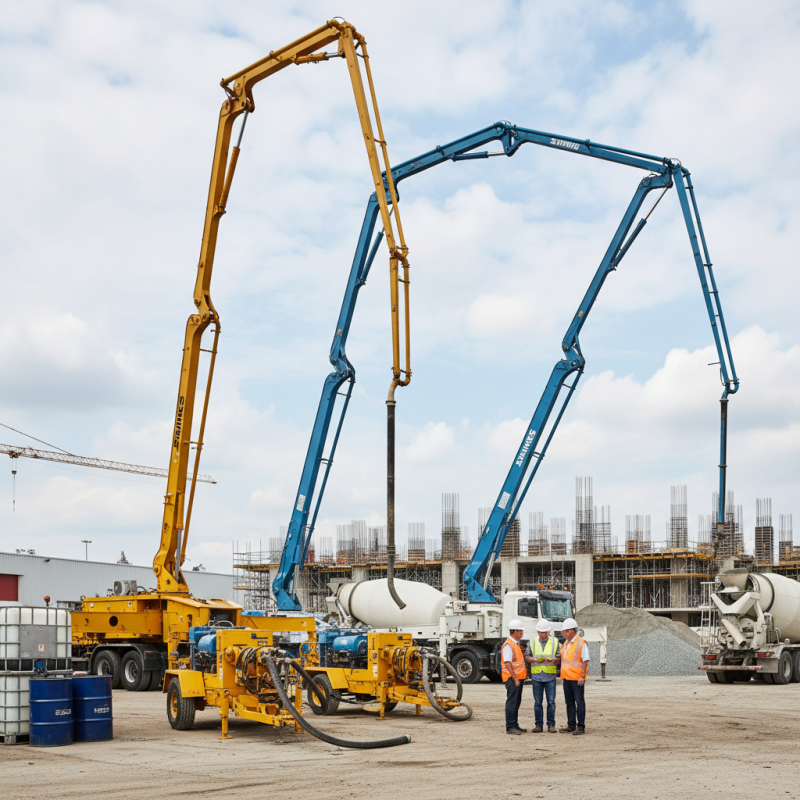
How to Select the Right Schwing Pump for Your Project?
Choosing the right Schwing pump is crucial for successful projects. As industry expert John Smith once stated, "A proper Schwing pump selection can make or break your job." Understanding project needs is essential for this decision.
Schwing pumps vary in type and capacity. A construction project may require a different model than a mining operation. Factors like the material to be pumped and job site accessibility directly influence your choice. Each project's unique demands shape the performance of the chosen pump.
Moreover, many overlook the importance of maintenance considerations. A pump might seem perfect, but if it requires excessive upkeep, the costs can add up. Reflection on long-term benefits is essential. Selecting a Schwing pump involves balancing immediate needs with future reliability.
Understanding the Different Types of Schwing Pumps Available
When selecting the right Schwing pump for your project, it helps to understand the different types available. Schwing pumps come in various categories, each designed for specific tasks. The most common types include stationary, mobile, and line pumps. Stationary pumps are perfect for fixed locations and larger pours. Mobile pumps offer adaptability on job sites and ease of transport.
Tips: Consider the project scale. Is it large or small-scale? This affects your choice significantly. Line pumps work well for narrow spaces and long-distance pumping. Their compact design is an advantage, but they may not handle heavy loads as effectively.
Also, think about the concrete mix you'll use. Different pumps handle various consistencies and aggregates. A pump designed for a specific mix often yields better results. Evaluate your project's needs carefully. Sometimes, an ideal choice may be overlooked. Misjudging your requirements can lead to complications down the line. Don't rush the decision; take time to analyze both the project and the equipment.
Evaluating Project Requirements and Specifications for Pump Selection
When selecting a pump for your project, understanding the specific requirements is essential. Evaluate the flow rate needed for your application. This determines how fast you want to move material. For example, a construction site may require high flow rates for concrete placement. Hence, knowing your flow demands is crucial.
Consider the pressure requirements. Pumps need to operate efficiently under various pressures. It's important to assess how the pump will face obstacles in the pipeline. Will it require more force? A thorough assessment here can prevent issues later on, like using a pump that can't handle the pressure.
Tips for selection: Always refer to the project's specifications. Identify the consistency of the material being pumped. Is it thick or thin? Viscosity plays a major role in pump performance. Reflect on your terrain as well. Uneven surfaces may require specific pump features to maintain efficiency. Don't rush the selection process, as it can lead to costly mistakes. Engaging with experienced professionals can provide crucial insights.
Factors Influencing Pump Performance and Efficiency
Selecting the right pump for your project can be challenging. When considering factors influencing pump performance, start with flow rate. It determines how much material the pump can move in a given time. A pump may look powerful but might not handle high viscosity efficiently.
Next, consider the material being pumped. Different substances affect pump performance. For example, abrasive materials can wear down pumps quickly. It’s also essential to think about the distance and height of the pumping operation. Longer distances require more power, increasing energy costs. It’s easy to underestimate these needs.
Finally, think about maintenance. Some pumps need regular checks and parts replacements. This can add to operational downtime. Choosing a pump that matches your project’s specific demands, while understanding these factors, will guide you in making a more informed decision. Remember, the perfect pump might not exist. Reflect on what trade-offs you are willing to make.
Assessing Budget and Cost Considerations for Schwing Pumps
Selecting the right pump for your project involves careful consideration of your budget. Cost is often a deciding factor when choosing equipment. It’s important to balance quality and price to make an informed decision.
When evaluating your budget, consider the total cost of ownership. This includes maintenance, fuel consumption, and parts replacement. A cheaper initial investment may lead to higher long-term expenses. Be cautious; assess all potential costs before committing.
Here are some tips:
- Research various pump models to compare their efficiency and durability.
- Understand your project requirements. A more powerful pump may save time but cost more upfront.
- Consider rental options. Sometimes, renting equipment for short-term needs is more economical.
Evaluate your needs honestly. This reflection helps avoid overspending on unnecessary features. Ensure the pump you select meets both your budget and project demands effectively.
Looking at Maintenance and Support Options for Selected Pumps
Selecting the right pump for your project involves many factors, particularly maintenance and support. Maintenance can significantly impact the longevity and performance of your pump. According to industry reports, up to 70% of pump failures are due to inadequate maintenance. Regular inspections are recommended every six months for optimal performance.
Tip: Always check the availability of spare parts for any chosen pump. Delays in obtaining parts can lead to project downtime.
Support services also play a crucial role in ensuring that your pump operates efficiently. Some providers offer 24/7 customer service, which can be a lifesaver during emergencies. A lack of support can worsen minor issues, turning them into significant problems.
Tip: Evaluate the warranty and support options before making a commitment. A thorough understanding provides peace of mind and can save costs in the long run.
Pumps are complex machines that require careful consideration. Poor maintenance practices can lead to unexpected expenses and project delays. Keeping a strict maintenance schedule is essential, yet many overlook this crucial aspect. Reflecting on real-world experiences can often illuminate both successes and failures in pump management.
How to Select the Right Schwing Pump for Your Project? - Looking at Maintenance and Support Options for Selected Pumps
| Pump Model | Flow Rate (m3/h) | Max Pressure (bar) | Maintenance Frequency | Support Options |
| Model A | 30 | 80 | Every 6 months | 24/7 Phone Support, Online Resources |
| Model B | 25 | 75 | Every 3 months | Email Support, On-site Assistance |
| Model C | 35 | 85 | Yearly | Live Chat, Technical Manuals |
| Model D | 40 | 90 | Every 4 months | Training Sessions, FAQ Section |