Blog
How to Choose the Right Excavator Parts in 2026?
Choosing the right excavator parts in 2026 will require more than comparing prices online. Machine age, operating hours, soil conditions, hydraulic pressure, and service history all influence the correct choice. A bucket tooth used in abrasive granite faces different demands from one working in soft clay. Small differences matter.
Mike Brezonick, a veteran heavy-equipment executive, offers a practical principle: “The right part is the one that protects productivity, reliability, and total operating cost.” That idea should guide every purchase. Genuine components often provide precise fitment and documented specifications. High-quality aftermarket excavator parts can also perform well when their materials, tolerances, and testing are transparent. The label alone proves little.
Look beyond the product photograph. Check the excavator’s exact model, serial-number range, attachment requirements, and hydraulic specifications. Confirm warranty terms, return conditions, and technical support. A lower-priced seal kit may appear attractive, yet premature leakage can stop a machine beside a trench. That repair may cost more than the original saving.
Some decisions remain difficult. Parts data can be incomplete, especially for older machines. Suppliers may also describe compatibility too confidently. Therefore, careful buyers should verify measurements, request test records, and consult qualified technicians before ordering. Keep the old component nearby for comparison. Take clear photographs.
This guide examines how to evaluate excavator parts for durability, compatibility, safety, and long-term value in 2026. It also acknowledges an uncomfortable truth: the cheapest decision is not always the most economical one.
Understanding Excavator Parts and Their Functions
How to Choose the Right Excavator Parts in 2026?
Understanding Excavator Parts and Their Functions
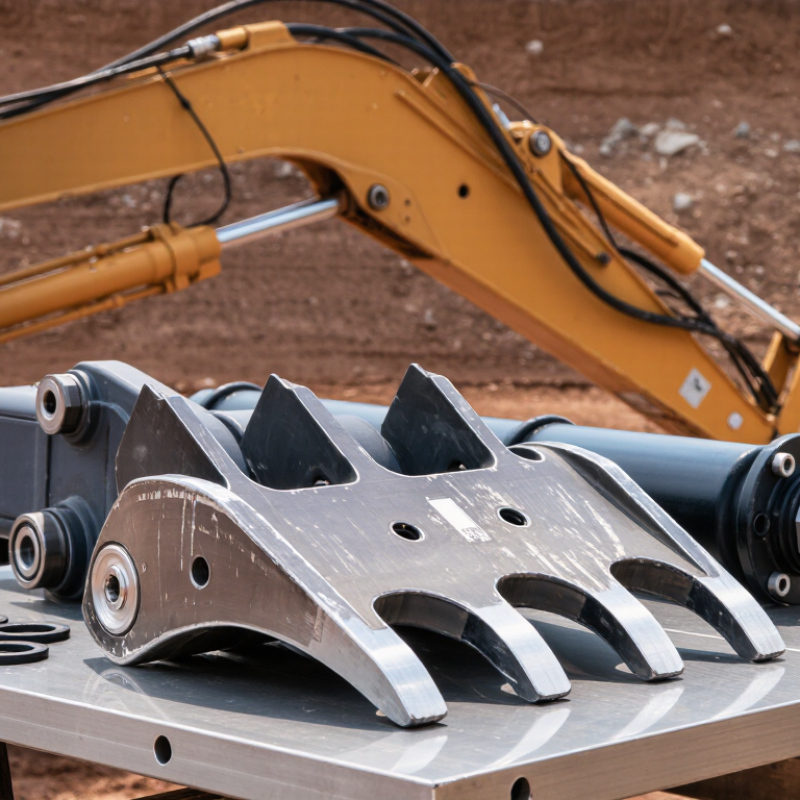
Excavator parts work as a connected system, not as isolated replacements. Each component affects power, movement, safety, and operating cost. During field inspections, I start with the hydraulic circuit, undercarriage, engine systems, and electronic controls. Hydraulic pumps create flow, while control valves direct that flow to cylinders and motors. Hydraulic cylinders produce arm and boom movement. Final drives transfer power to the tracks. Filters protect sensitive components from damaging particles.
Undercarriage parts deserve careful attention. Track chains, rollers, idlers, and sprockets experience constant impact on rough ground. Measure wear instead of judging it by appearance. Electronic sensors also need checking, especially on newer machines with automated monitoring. A faulty pressure sensor can imitate a pump problem. That mistake can become expensive.
Part selection should match the machine’s serial number, production year, working conditions, and maintenance records. Read the technical manual and verify dimensions, pressure ratings, materials, and connector types. Reliable suppliers should provide traceable specifications, inspection records, and clear warranty terms. I once chose a seal kit by size alone. It fitted, but the material failed under high heat. Now I check fluid compatibility and temperature ratings before ordering. Remanufactured parts can work well, but their testing process must be documented. Newer equipment may also require software calibration after installation, which is easy to overlook.
Identifying the Correct Excavator Model and Part Specifications
Choosing the right excavator part starts with identifying the exact machine model. Do not rely on appearance alone. Similar excavators may use different hydraulic systems, pins, or electrical connectors. Check the identification plate, production year, operating weight, and model suffix. Then compare those details with the service manual or parts catalog.
Part specifications matter as much as model numbers. For hydraulic components, verify pressure rating, flow range, port size, and seal material. For attachments, measure pin diameter, center-to-center distance, bushings, and mounting width. A bucket can fit the dipper arm but still create unsafe movement if its linkage geometry is wrong. Small differences matter.
A practical inspection includes photographs and careful measurements. Record the old part before removal. Note wear patterns, thread direction, and hose routing. Never trust memory alone. The tempting shortcut is choosing the cheapest matching item, but compatibility is not proven by shape. I still recommend checking two independent references when the catalog information seems unclear. Even experienced technicians can misread a suffix or overlook a mid-year specification change. Use verified dimensions, documented ratings, and installation guidance from qualified service personnel.
Choosing Between OEM, Aftermarket, and Used Excavator Parts
How to Choose the Right Excavator Parts in 2026?
Choosing between OEM, aftermarket, and used excavator parts requires more than comparing prices. The correct choice depends on machine age, operating hours, workload, and downtime risks. OEM parts usually provide precise fitment and documented specifications. They suit critical systems, such as hydraulic pumps, swing motors, and electronic controllers. However, their higher cost can strain a maintenance budget.
Aftermarket parts can offer practical value when the supplier provides clear material data, pressure ratings, and warranty terms. Check dimensions carefully, especially for pins, bushings, seals, and filters. A small mismatch may cause uneven wear or hydraulic leakage. Used parts can work well for older machines or non-critical assemblies. Inspect cracks, shaft scoring, corrosion, and thread damage before purchase. Ask for service records and operating hours. Photos alone are not enough.
Tips: Record the machine model, serial number, and part number before ordering. Compare the old component with the replacement on a clean workbench. For used hydraulic parts, request pressure-test results. Keep written inspection notes. I have seen cheap parts create expensive second repairs. Still, an aftermarket bushing may outperform a neglected used one. That is why price should never be the only decision. When uncertain, measure twice and ask a qualified technician to verify compatibility.
Evaluating Part Quality, Compatibility, and Service Life
How to Choose the Right Excavator Parts in 2026?
Evaluating Part Quality, Compatibility, and Service Life
Choosing excavator parts requires more than comparing prices. Quality affects hydraulic efficiency, operator safety, and repair frequency. In field inspections, I have seen inexpensive seals fail early because their material did not match the machine’s fluid or temperature range. Check material specifications, manufacturing tolerances, surface finish, and traceable inspection records. A reliable supplier should provide clear test data, installation guidance, and warranty terms.
Compatibility must be verified before ordering. Match the machine model, production year, serial range, dimensions, connection type, and pressure rating. Fit comes first. Measure twice. Do not guess. A part may look identical but still have a different port angle or hardness. Compare technical drawings with the removed component. Confirm that nearby parts, such as seals, bolts, or bushings, will not create alignment problems.
Tips: Inspect wear patterns before replacement. Uneven scoring may indicate misalignment, contamination, or excessive pressure. Select parts designed for the actual workload, not only the catalog specification. Track operating hours, lubrication intervals, and failure dates. This record helps estimate service life and exposes weak maintenance habits. I once overlooked storage conditions during an assessment; moisture had damaged unused components before installation. That mistake changed my checklist. Ask for batch information and installation limits, especially when downtime is costly. A practical choice balances verified quality, exact compatibility, and realistic service expectations.
How to Choose the Right Excavator Parts in 2026? - Evaluating Part Quality, Compatibility, and Service Life
A practical comparison framework for selecting replacement parts according to operating conditions, technical fit, expected durability, and total maintenance value.
| Part Category | Quality Indicators | Compatibility Checks | Typical Service-Life Planning Range* | Recommended Inspection or Test | Replacement Decision Criteria |
|---|---|---|---|---|---|
| Track Chains and Shoes | Uniform heat treatment, consistent pitch, accurate shoe-hole spacing, and crack-free welds. | Confirm machine family, track pitch, link count, shoe width, bolt diameter, and sprocket tooth profile. | Approximately 2,000–5,000 operating hours in mixed-duty work; abrasive soil can shorten life substantially. | Measure link pitch, bushing diameter, shoe grouser height, and sprocket wear. Check for loose bolts, cracked links, and abnormal chain elongation. | Replace when measured wear reaches the service limit specified for the machine or when chain elongation causes poor sprocket engagement. |
| Track Rollers and Idlers | Hardened rolling surfaces, effective floating seals, smooth rotation, and no oil leakage. | Match roller flange profile, mounting dimensions, bolt pattern, track-frame clearance, and lubrication arrangement. | Approximately 3,000–7,000 operating hours, depending on mud, rock, load, alignment, and cleaning practices. | Check radial play, seal leakage, shell scoring, flange wear, and temperature difference between rollers during operation. | Replace a component when leakage, excessive play, seized rotation, or flange wear threatens chain alignment. |
| Hydraulic Pumps and Motors | Documented pressure and flow performance, clean internal surfaces, accurate machining, and verified relief-valve settings. | Verify displacement, mounting flange, shaft type, rotation direction, port size, control interface, and rated pressure. | Approximately 6,000–12,000 operating hours when filtration, oil cleanliness, and cooling are properly maintained. | Perform pressure, flow, case-drain, and temperature tests using calibrated instruments. Compare results with the machine service specification. | Investigate low flow, excessive case drain, unstable pressure, overheating, or abnormal noise before approving replacement. |
| Hydraulic Cylinders | Straight rod, hard-chrome surface, correctly sized seals, smooth bore, and pressure-tested assembly. | Match bore, rod diameter, closed and extended lengths, pin diameter, port position, cushioning, and mounting style. | Approximately 5,000–10,000 operating hours; side loading and contaminated oil reduce expected life. | Inspect rod pitting, seal leakage, barrel scoring, pin-bushing wear, and drift under a controlled load test. | Replace or rebuild when leakage persists, the rod is damaged, cylinder drift exceeds the permitted limit, or mounting alignment is poor. |
| Hydraulic Hoses and Fittings | Correct pressure rating, compatible hose construction, clean crimping, and traceable batch or pressure-test records. | Confirm inner diameter, length, bend radius, thread standard, fitting orientation, pressure rating, and fluid compatibility. | Commonly 2–5 years in mobile equipment; severe heat, abrasion, vibration, or chemical exposure can reduce life. | Inspect for abrasion, blisters, exposed reinforcement, flattened sections, damaged covers, leakage, and incorrect routing. | Replace immediately if reinforcement is visible, a blister appears, fittings are damaged, or the hose exceeds the planned age limit. |
| Hydraulic Filters | Correct filtration rating, adequate dirt-holding capacity, reliable bypass-valve setting, and high-quality sealing materials. | Match housing dimensions, thread, flow direction, pressure rating, filter area, and required filtration grade. | Usually replaced at the machine's scheduled maintenance interval, often about 500–1,000 operating hours. | Check restriction indicator, filter condition, fluid cleanliness, seal condition, and evidence of bypass operation. | Replace at the scheduled interval or earlier when restriction rises, oil contamination is detected, or the filter has been opened. |
| Engine Air and Fuel Filters | Correct filtration efficiency, stable media structure, secure end caps, and reliable anti-drainback or water-separation features where required. | Confirm dimensions, sealing surface, flow direction, sensor or drain-port arrangement, and fuel-system pressure requirements. | Air filters commonly require inspection every 250–500 hours; replacement intervals often fall near 500–1,000 hours, subject to dust load. | Measure restriction where specified, inspect seals and media, drain water separators, and monitor engine smoke or power loss. | Replace when restriction reaches the limit, media is damaged, water contamination is present, or the scheduled interval is reached. |
| Bucket Teeth and Adapters | Wear-resistant material, consistent heat treatment, secure retention system, and correct tooth-to-adapter fit. | Match bucket series, adapter profile, pin and retainer dimensions, tooth orientation, and digging application. | Approximately 100–800 operating hours; rock, slag, and high-impact excavation can reduce life sharply. | Measure tip length and adapter wear, inspect for cracks, and verify that the tooth is retained without excessive movement. | Replace before the adapter nose or bucket lip is damaged. Excessive tooth clearance indicates a retention or fit problem. |
| Pins, Bushings, and Linkage Components | Correct hardness depth, accurate diameter, smooth surface finish, and properly formed lubrication passages. | Verify pin diameter, bushing outside diameter, center-to-center dimensions, grease-port location, and alignment tolerances. | Approximately 2,000–6,000 operating hours with regular greasing; dry or misaligned joints may wear much sooner. | Measure pin and bushing diameters, check joint clearance, inspect grease flow, and look for ovalized bores or scoring. | Replace or line-bore components when clearance exceeds the service limit or uneven wear causes attachment movement. |
| Cooling System Components | Correct fin density, pressure rating, corrosion resistance, leak-free joints, and adequate heat-transfer capacity. | Match core dimensions, hose positions, fan clearance, mounting points, cap pressure, and system fluid requirements. | Approximately 5,000–10,000 operating hours; expected life depends strongly on cleanliness, coolant condition, and vibration. | Pressure-test the system, inspect fin blockage, verify coolant concentration, check fan operation, and monitor operating temperature. | Replace when leakage, corrosion, repeated overheating, blocked passages, or structural damage cannot be corrected economically. |
| Electrical Sensors and Solenoids | Stable calibration, sealed connectors, vibration resistance, correct electrical protection, and documented output range. | Confirm connector type, pin assignment, voltage range, signal type, thread size, temperature range, and control-system requirements. | Approximately 3,000–8,000 operating hours, subject to heat, moisture, vibration, and electrical load. | Check fault codes, supply voltage, resistance or signal output, connector condition, and performance at operating temperature. | Replace only after wiring, grounding, connectors, and calibration have been tested; intermittent faults often originate outside the sensor. |
*Service-life ranges are planning estimates rather than guaranteed operating lives. Actual results depend on machine size, duty cycle, soil or rock conditions, operator technique, lubrication, hydraulic-fluid cleanliness, maintenance quality, storage, and alignment. Always verify final dimensions, pressure ratings, wear limits, and replacement intervals against the excavator's technical service documentation.
Comparing Costs, Suppliers, Warranties, and Delivery Options
How to Choose the Right Excavator Parts in 2026?
Comparing Costs, Suppliers, Warranties, and Delivery Options
Choosing excavator parts in 2026 requires more than finding the lowest listing price. On active jobs, I compare the purchase cost with downtime, fitting labor, and expected service life. A cheap hydraulic seal can become expensive after one leak. Ask for material specifications, dimensional tolerances, and compatibility records. Request clear photos and batch information. “Will it fit?” is not enough. A reliable supplier explains why.
Supplier quality matters as much as the component itself. I check technical support, stock accuracy, warehouse location, and replacement procedures before ordering. Independent reviews help, but verified service records provide stronger evidence. Get quotations from at least three suppliers. Compare shipping, taxes, inspection fees, and emergency delivery charges. Some suppliers promise dispatch within 24 hours, yet delivery may take a week. That gap needs attention.
Warranty terms should be written in plain language. Check coverage periods, installation requirements, exclusions, labor reimbursement, and return shipping. A longer warranty is not automatically better. It may exclude wear, contaminated fluid, or incorrect installation. Keep invoices, machine hours, photos, and maintenance logs. These records support a fair claim. I have learned that delivery speed can distort decisions. Waiting two days may cost less than buying an unverified part today. Still, every recommendation should match the machine manual and operating conditions. I sometimes overestimate future savings. That is worth admitting.
Related Posts
-
Top Excavator Parts to Consider in 2025: Essential Buying Guide
-
2025 Top Excavator Parts Guide for Optimal Performance and Durability
-
The Ultimate Guide to Choosing the Right Excavator Parts for Maximum Efficiency and Performance
-
Transforming Construction Sites with the Best Heavy Equipment Parts for Efficient Operations
-
Unlocking Efficiency: The Benefits of Sourcing the Best Construction Equipment Parts
-
Solutions for Sourcing Heavy Equipment Parts Globally