Blog

2026 Top Heavy Equipment Buying Guide for Global Buyers

Buying heavy equipment in 2026 requires more than comparing prices, horsepower, and brand names. Global buyers face changing fuel costs, shipping delays, local service gaps, and stricter emissions expectations. A machine that performs well on a Canadian road project may struggle in tropical heat or remote African terrain.

Mike Woof, a long-time construction equipment journalist and industry observer, once captured the issue clearly: “The right machine is the one that earns its keep on the job.” That principle guides this buying guide. Productivity matters, but uptime, operator safety, parts access, resale value, and technical support matter just as much.

This guide examines excavators, wheel loaders, bulldozers, cranes, telehandlers, and specialized machinery. It compares practical specifications, including operating weight, engine output, lifting capacity, fuel consumption, attachment compatibility, and maintenance intervals. It also considers the buyer’s location, project duration, soil conditions, climate, and transport limitations.

There is no universal best choice. That sounds obvious, yet buyers still rely on attractive brochures and impressive demonstrations. Those sources rarely show downtime, difficult terrain, or delayed spare parts. Real experience is less polished.

Some recommendations will remain conditional. Market data can change quickly, and dealer performance differs between regions. Buyers should verify technical details with manufacturers, authorized dealers, qualified inspectors, and experienced operators before purchasing. A careful decision may cost more initially. It can prevent expensive idle hours later.

This 2026 guide offers a practical framework for making that decision with clearer evidence, realistic expectations, and fewer costly surprises.

2026 Top Heavy Equipment Buying Guide for Global Buyers

Heavy Equipment Categories and Their Global Applications

Heavy Equipment Categories and Their Global Applications

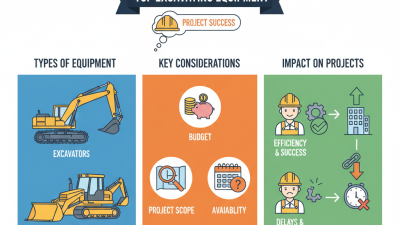
Heavy equipment is not one universal solution. Each category matches a different task, site condition, and operating risk. Excavators dig foundations, trenches, and drainage channels, with attachments suited to varied ground conditions. Wheel loaders move aggregates, soil, and waste across busy sites. Bulldozers level land and push material over rough terrain. Mobile cranes lift heavy components where access and height create challenges. Forklifts support warehouses, factories, and container yards. Simple categories, complex decisions.

In construction, excavators and loaders often work together near concrete foundations and road projects. Mining operations require powerful haul trucks, drills, and earthmoving machines for demanding terrain. Ports depend on cranes, reach stackers, and terminal tractors to handle cargo efficiently. Agriculture uses tractors, telehandlers, and compact loaders for soil preparation and material handling. Disaster-recovery teams may select compact equipment for narrow streets and unstable ground. Climate changes the equation. Dust, heat, rain, and freezing conditions affect performance.

Experienced buyers compare machine capacity with local workload, not only purchase price. Check fuel use, service access, spare-part availability, operator training, and transport requirements. Ask whether the machine fits local roads, storage areas, and jobsite limits. Used equipment can provide value, but inspection records may be incomplete. Remote monitoring can improve maintenance planning, although connectivity is not reliable everywhere. No guide is perfect. Fuel estimates can shift when operators, terrain, and loads change. A practical trial under real site conditions often reveals more than a polished specification sheet.

2026 Top Heavy Equipment Buying Guide for Global Buyers

Heavy Equipment Categories and Their Global Applications

The chart compares representative operating weights for commonly traded heavy-equipment categories. These indicative mid-size benchmarks help buyers evaluate transport planning, job-site access, lifting requirements, fuel consumption, and application suitability. Excavators and bulldozers are widely used for earthmoving and infrastructure construction; wheel loaders support quarrying, mining, and material handling; motor graders are used for road finishing; articulated dump trucks transport bulk materials; and telehandlers serve construction, agriculture, and industrial logistics.

Data basis: representative operating-weight benchmarks in metric tonnes for common mid-size configurations. Actual specifications vary by configuration, attachments, regional regulations, and operating conditions.

Key Specifications for Comparing Heavy Equipment

2026 Top Heavy Equipment Buying Guide for Global Buyers

Key specifications matter more than a machine’s impressive appearance. KHL’s Yellow Table 2024 recorded about 1.17 million construction equipment sales worldwide in 2023, worth roughly $243 billion. That scale makes careful comparison essential.

Start with operating weight, rated capacity, engine power, hydraulic flow, and fuel consumption. A 20-ton excavator may lift well, yet its hydraulic output can limit attachments on rocky sites. Check the full-duty cycle, not only the maximum figure.

Measure the machine against the jobsite. For loaders, compare breakout force, bucket volume, tipping load, and turning radius. For excavators, review digging depth, reach, swing speed, and auxiliary flow.

The International Energy Agency notes that fuel efficiency remains important as energy costs and emissions requirements change. Request test data under similar loads. Laboratory figures can look clean. Mud is less polite.

Tips:

Record three working cycles with a stopwatch. Compare fuel used per cubic metre moved. Check service intervals, filter access, tire availability, and local technician coverage. Do not ignore transport width or ground pressure. A powerful machine may fail the project if roads, bridges, or permits restrict movement. I would also leave a margin for operator error and weather; my first estimate is often too optimistic. Data should guide the purchase, but site evidence should challenge it.

How to Assess Suppliers, Quality, and Equipment Compliance

2026 Top Heavy Equipment Buying Guide for Global Buyers

When assessing a heavy equipment supplier, request verifiable production records, inspection reports, and customer references. A polished website proves very little. Ask who performs final testing and how defects are recorded. During a factory visit, inspect welding lines, hydraulic fittings, paint thickness, and spare-parts storage. Small details often reveal process discipline.

Quality must match the working environment. Compare load ratings, fuel systems, cooling capacity, operator visibility, and maintenance access. Review test data under realistic temperatures, dust levels, slopes, and duty cycles. Ask for serial-number traceability from major components to final inspection. Do not accept translated documents without checking the original technical information.

Compliance needs equal attention. Confirm the equipment meets safety, emissions, noise, electrical, and transport requirements for the destination market. Requirements can differ between countries and even project sites. Request declarations of conformity, test certificates, manuals, warning labels, and software documentation where applicable. Independent laboratory checks may be worthwhile for high-value purchases.

I once trusted a complete document package too quickly. A later inspection found inconsistent hydraulic pressure readings. That mistake changed my supplier checklist. No audit is perfect. Leave room for doubt, and verify critical claims twice. A supplier who answers difficult questions clearly is usually safer than one offering only attractive prices.

2026 Top Heavy Equipment Buying Guide for Global Buyers - How to Assess Suppliers, Quality, and Equipment Compliance

Assessment Area Key Metric or Check Reliable Evidence or Benchmark Why It Matters Recommended Buyer Action
Supplier capability Operating history and production capacity Audited company profile, production-site address, workforce information, annual capacity, and three years of verifiable export records. Shows whether the supplier can support repeat orders, consistent quality, and long-term parts availability. Request documents and conduct a video or on-site factory audit before issuing a large purchase order.
Supplier quality system Quality-management controls A valid ISO 9001 certificate from an accredited certification body, documented inspection plans, nonconformity records, and corrective-action procedures. A quality certificate supports process control but does not replace product inspection or performance testing. Verify certificate scope, validity, issuing body, and whether the covered site is the actual manufacturing location.
Manufacturing traceability Serial-number and component traceability Permanent equipment identification plate, engine and hydraulic component records, batch numbers, inspection dates, and digital or paper build records. Improves warranty handling, recall management, maintenance planning, and theft prevention. Require traceability records to be linked to each unit before shipment.
Equipment suitability Rated operating capacity and duty cycle Manufacturer technical data showing operating weight, rated load, breakout force, lift capacity, bucket or attachment capacity, cycle time, and intended duty class. A machine that is undersized may fail to meet production targets; an oversized machine can increase fuel, transport, and ownership costs. Match the specification to soil conditions, altitude, temperature, working radius, load density, and daily operating hours.
Engine and emissions Applicable emissions level and fuel requirements Engine certification documents for the destination market, such as EU Stage V or United States EPA Tier 4 Final where applicable, plus required fuel and after-treatment specifications. Non-compliant engines may be refused at customs, restricted from operation, or subject to penalties. Confirm the destination-country rule, test cycle, fuel quality, urea or diesel-exhaust-fluid availability, and service capability.
Safety design Guarding, access, visibility, emergency controls, and rollover protection Risk assessment and test records referencing applicable earth-moving machinery safety requirements, including ISO 20474 where relevant, and rollover or falling-object protection when required by the application. Reduces operator injury risk and supports workplace safety compliance. Inspect steps, handrails, mirrors or cameras, alarms, seat restraints, emergency stops, and protective structures during acceptance testing.
Regulatory compliance Conformity documentation for the destination market Declaration of conformity, technical file or equivalent, operating manual, warning labels, electrical documentation, and local registration documents where required. Documentation is often required for customs clearance, registration, workplace inspections, and insurance. Specify the destination market in the contract and require all documents in the buyer's accepted language before dispatch.
Electrical and control systems Voltage, communications, diagnostic access, and software controls Electrical schematics, control-system specifications, fault-code list, diagnostic interface details, software version records, and cybersecurity update policy for connected equipment. Incompatible electrical systems or restricted diagnostics can cause downtime and expensive service delays. Confirm voltage, connector types, local network compatibility, diagnostic rights, and ownership of machine-generated data.
Component quality Hydraulic, structural, drivetrain, and wear-part performance Material certificates where relevant, weld inspection records, hydraulic pressure test results, leakage checks, torque records, and wear-part specifications. Critical-component defects can lead to safety incidents, production loss, and high repair costs. Define measurable acceptance limits for leakage, pressure, alignment, weld quality, noise, and vibration.
Factory acceptance testing Functional and load testing before shipment Signed factory acceptance test covering cold start, controls, travel, steering, brakes, hydraulics, attachment operation, alarms, lights, and measured performance. Identifies defects before international transport and reduces disputes over responsibility. Make test completion and approval a payment milestone, with photographic or video evidence retained.
Independent inspection Pre-shipment inspection coverage Independent inspection report covering quantity, model, serial numbers, visual condition, dimensions, documents, packaging, and agreed functional tests. Provides an objective record of condition and conformity before ownership or transport risk transfers. Use an independent inspector for high-value orders or unfamiliar suppliers.
Fuel and operating efficiency Fuel consumption under defined working conditions Measured fuel-use data stated in litres per operating hour or litres per unit of production, with load, cycle, terrain, attachment, and test conditions disclosed. Fuel is a major operating cost, but published figures are not comparable without consistent test conditions. Compare lifecycle cost rather than brochure claims and validate consumption during a supervised field trial.
Maintenance requirements Service intervals and consumables Scheduled-maintenance table listing engine oil, hydraulic oil, filters, coolant, greasing points, belt inspection, and replacement intervals in operating hours. Predictable maintenance helps control downtime, inventory, and total ownership cost. Calculate annual service hours and consumable costs using the planned utilization rate.
Spare-parts support Parts availability and lead time Parts catalogue, stock location, standard dispatch time, emergency-order process, superseded-part policy, and minimum service-stock recommendation. Parts delays can stop equipment even when the original fault is minor. Obtain a critical-spares list and include maximum lead times and service obligations in the contract.
Warranty protection Warranty period, exclusions, and claim process Written warranty defining duration by calendar time and operating hours, covered components, labour, travel, consumables, exclusions, response time, and claim evidence. Clear terms reduce disagreements and quantify the supplier's after-sales commitment. Ensure warranty obligations remain valid for cross-border shipments and identify the responsible service contact.
Operator support Training and technical documentation Operator manual, maintenance manual, parts book, safety instructions, commissioning checklist, and training materials in the required language. Correct operation improves safety, productivity, fuel efficiency, and equipment life. Include commissioning and operator training in the purchase scope rather than treating them as optional extras.
Transport and logistics Shipping dimensions, weight, lifting points, and delivery terms Verified packed dimensions, gross weight, centre of gravity, lifting points, export packaging specification, insurance responsibility, and agreed Incoterms. Incorrect logistics data can cause port delays, unsafe lifting, unexpected charges, or transport damage. Approve packing and shipping drawings before loading and document damage with photographs at receipt.
Total cost of ownership Purchase price plus operating and end-of-life costs Five-year or planned-life model including purchase price, freight, duties, fuel, labour, maintenance, tyres or tracks, attachments, downtime, financing, resale, and disposal. The lowest purchase price may not provide the lowest cost per operating hour or unit of output. Compare at least three technically equivalent offers using the same utilization and cost assumptions.
Contract safeguards Specification, acceptance, payment, and dispute controls Contract annex containing the exact configuration, performance requirements, inspection rights, delivery date, remedies, retention amount, governing law, and document list. A detailed contract prevents substitutions and establishes measurable remedies for late or nonconforming delivery. Do not rely on quotations alone; attach the approved technical specification and inspection plan to the signed contract.
Buyer Note: Compliance requirements vary by destination, equipment category, engine power, operating environment, and intended use. Confirm current requirements with the destination-country authority, an accredited conformity-assessment body, and the importing customs broker before shipment.

Financing, Shipping, Customs, and Import Considerations

Buying heavy equipment in 2026 requires more than comparing purchase prices. Financing should include interest, insurance, currency exposure, deposits, and delayed project revenue. A low monthly payment can hide a high total cost. Request a full repayment schedule and confirm whether the lender permits early settlement. No forecast is perfect. Keep a cash reserve for repairs and port delays.

Shipping plans should start with accurate dimensions, weight, lifting points, and center of gravity. UNCTAD’s Review of Maritime Transport 2024 reported that global seaborne trade grew 2.4% in 2023, while disruptions continued to pressure routes and capacity. For oversized machinery, compare roll-on/roll-off, flat-rack, and breakbulk options. Ask for port storage limits, inland haulage quotes, cargo insurance, and photographs before loading. Small measurement errors become expensive crane charges.

Customs preparation deserves equal attention. Confirm the correct HS classification, country-of-origin documents, customs value, duty rate, taxes, and importer-of-record responsibilities before payment. The World Bank’s 2023 Logistics Performance Index shows uneven customs efficiency and shipment reliability across markets. Local brokers can interpret procedures, but the buyer remains responsible for accurate declarations. Build a document file containing the commercial invoice, packing list, bill of lading, technical specifications, and certificates required by the destination country.

My practical reservation is simple: supplier estimates often exclude terminal handling and inland delivery. Treat every “landed cost” as provisional until a written, destination-specific quotation is secured.

Step-by-Step Checklist for Choosing the Right Equipment

For global buyers, selecting heavy equipment should begin with the jobsite, not the sales quotation. Oxford Economics’ Global Construction 2030 study forecasts strong long-term construction growth, but demand will differ by region. Define soil type, lifting height, transport limits, climate, and annual operating hours. Write these conditions down.

Next, compare machines by total cost of ownership. Include purchase price, fuel, electricity, maintenance, tires, attachments, insurance, and resale value. KHL Group’s 2024 Yellow Table recorded about 1.2 million construction equipment sales worldwide. That scale creates many choices, but also hides specification differences. A cheaper machine may consume more fuel. That mistake hurts later.

Check service coverage before signing. Ask for parts lead times, technician training, warranty exclusions, and maintenance intervals. Request documented test results, safety certifications, emissions compliance, and operator instructions for your destination country. The International Energy Agency’s Global Energy Review shows continued pressure to reduce energy use and emissions. Therefore, measure fuel or energy consumption during a realistic duty cycle, not only laboratory testing. Also compare hydraulic performance under cold starts and dusty conditions. Small details matter.

Review telematics carefully. Useful data includes idle time, fault codes, utilization, and maintenance alerts. Do not accept every digital feature automatically. Data ownership and connectivity may remain unclear. Ask who stores the information and whether local networks support it. Finally, obtain two independent inspections and calculate payback under conservative workload assumptions. Perfect forecasts do not exist. Your checklist should expose uncertainty, not disguise it.